
Reviewed · PRIVATE
Private Soviet Riga tour
Riga’s Soviet past is easiest to understand on foot, where monuments, streets, hotels, and government buildings become part of one connected story. This private tour follows that story from the Latvian Red Riflemen and Stalin’s era through deportations, Soviet control, the 1991 barricades, and the collapse of the Union.
I like two things right away: the private format lets you stop and ask questions, and guide Edvards brings personal family experience to a subject that can otherwise feel dry. I also like the route’s range, from a cathedral and fashion house to the former Hotel Latvia and KGB headquarters.
The main consideration is pace. Ten stops in about two hours means the tour gives you a strong framework rather than a long visit inside each site. There is no hotel pickup, and the walk ends outside the Old Town area, so plan your route afterward.
Key points to know before booking
- Edvards leads a personal, question-friendly walk: His own family experience helps connect major events with everyday life under Soviet rule.
- The route covers several Soviet eras: You move from Stalin to Gorbachev, then into the fight for Latvian independence.
- The 1991 barricades get proper attention: Riga’s independence movement is treated as the climax of the walk, not a footnote.
- You see places with different roles: The route includes the Orthodox cathedral, Hotel Latvia, a fashion house, residential architecture, and the KGB building.
- It is private for up to 15 people: The $180.62 group price can make sense for families or friends who want control over the conversation.
- The finish is practical but not central: Dailes Theatre is about a 15-minute walk from the Old Town.
Riga’s Soviet story begins with the Red Riflemen
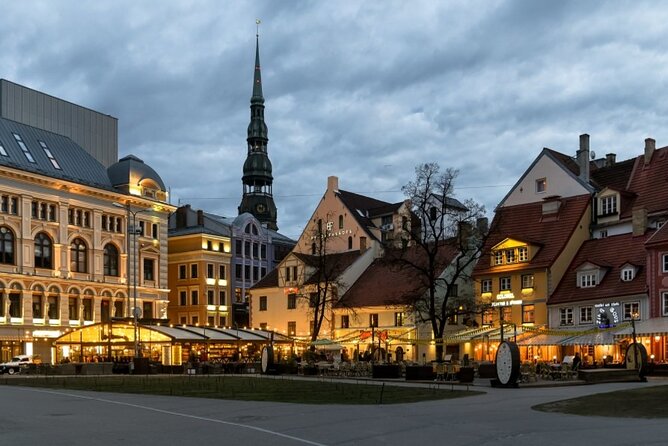
The meeting point at Latviešu strēlnieku laukums gives Edvards a useful place to set the scene. This opening section lasts about 15 minutes and introduces the main Soviet eras, from Stalin to Gorbachev, before turning to the Latvian Red Riflemen and their monument.
That order matters. You are not simply looking at a statue and receiving a date. You are learning why the Red Riflemen became part of Soviet cultural memory, and how Latvia’s own past was folded into a wider Soviet story. The monument offers a starting point for discussing identity, loyalty, and the way public symbols can change meaning over time.
I like that this first stop gives you a vocabulary for the rest of the walk. Without it, later references to Soviet rule, Soviet culture, and independence can blur together. With it, you can better follow the shift from revolutionary mythology to state control and, eventually, national resistance.
Admission is free at this stop, as it is throughout the listed route. The value comes from the explanation, not from entering a paid attraction.
More riga soviet history tours in Riga:
- Private Day Tour to Sigulda, Turaida Castle and Soviet Bunker
★ 4.5 · 8 reviews - Full-Day Private Trip to Nuclear Missile Base and Secret Soviet Bunker
★ 4.5 · 7 reviews - Soviet Bunker, Seaside Fortress + Authentic BBQ lunch with beer
★ 5.0 · 4 reviews
Deportations become more than a date at the Occupation Museum
The next stop is the Museum of the Occupation of Latvia, where the discussion turns to deportations to Siberia. Edvards covers why deportations happened, their scale, and their effect on Latvian society.
This is one of the most serious parts of the tour. It gives human weight to the political changes described at the opening. A short 10-minute stop cannot cover every story or document, but it can show you why the Soviet period remains a living subject in Latvia rather than a remote chapter from a textbook.
I appreciate the focus on cause, scale, and impact. Those three questions help you understand both the machinery of repression and its lasting effect on families. If you want to visit the museum itself in detail, allow separate time. This tour treats it as a stop for context, not as a full museum visit.
That distinction is important when planning your day. You should not expect two hours of indoor exhibitions. This is primarily a walking conversation through Riga.
The 1991 barricades mark the emotional high point
At 1991 Barikazu Laukums, the subject moves from Soviet pressure to open resistance. Edvards explains the era of the barricades, when Latvians gathered to protect key sites during the struggle to restore independence.
This is the point where the tour’s earlier material comes together. The Red Riflemen, repression, deportations, and decades of Soviet rule provide the background. The barricades show what happened when Latvian independence became an immediate, physical fight.
You get about 10 minutes here, so expect a focused explanation rather than a long stop. Still, the location gives the story a clear center. Instead of treating independence as a legal event, the tour presents it as a period of uncertainty and public action.
For me, this is one of the strongest reasons to choose the private option. You can ask Edvards to explain terms or events that may be unfamiliar, and the group does not have to wait for a large crowd to move on.
The Baltic Way explains the power of peaceful protest
The Baltic Way Footprint Monument brings the story beyond Riga. Edvards examines the Baltic Way, the huge nonviolent anti-Soviet demonstration that linked people across the Baltic states.
The useful part here is the attention to practical details. The tour covers how the event was organized, what the mood was like at the time, and what effect it had. That helps you picture the scale and discipline of a protest that depended on coordination across a large area.
This stop also adds balance to the tour’s darker material. Soviet rule is discussed through deportations, surveillance, religion, and intimidation, but the Baltic Way shows organized public resistance without turning the story into a simple tale of despair.
The stop lasts about 10 minutes. You will not receive a full political history of all three Baltic states, but you will understand why the event mattered to Latvia’s path toward independence.
A few more Riga trips to weigh up
- Private Riga Old Town Walking Tour
★ 5.0 · 62 reviews - Private Full-Day Trip to Turaida, Sigulda, and Cesis
★ 4.5 · 52 reviews - Ultimate Husky dog sledding experience in Latvia – Private tour from Riga
★ 4.5 · 45 reviews - Private trip – Hill of Crosses / 2 countries in 1 day
★ 5.0 · 44 reviews
The Freedom Monument survived a difficult period
The Freedom Monument is Riga’s most famous monument and one of the route’s most important symbols. Edvards explains its meaning and how it survived the Soviet period.
The subject is not only the monument itself. It is also the question of what authorities choose to preserve, tolerate, or reinterpret. A national symbol can carry a message even when official power tries to control public memory.
I like this stop because it connects the physical center of Riga with the political center of the story. You are looking at an iconic landmark, but the guide asks you to see more than its appearance. Its survival becomes part of the larger account of Latvian identity under Soviet rule.
It is also a useful stop for anyone who has already seen the monument in a standard Old Town walk. This tour gives it a different meaning and places it inside the story of occupation and restored independence.
The Orthodox cathedral shows how religion was handled
At the Nativity of Christ Cathedral, the focus shifts to religion under Soviet rule. Edvards discusses the role of the Orthodox cathedral and the treatment of religion during the period.
This is a valuable change of subject. A tour about Soviet Riga could focus only on prisons, propaganda, and political control. Bringing in a working religious site shows another part of daily and public life, including the complicated position of religious institutions under an officially atheist state.
The stop lasts about 10 minutes. You should expect an explanation from outside or around the site rather than a guaranteed interior visit, since the tour information does not include an entrance or worship schedule. If you want to go inside, treat that as separate planning.
The cathedral also breaks up the route visually. After monuments tied to political power and national memory, you encounter a building connected to faith and community.
Hotel Latvia reveals the controlled world of foreign visitors
The Radisson Blu Latvija Conference & Spa Hotel was formerly Hotel Latvia. During the Soviet period, it was the only hotel in Riga where Western tourists were allowed to stay. Edvards explains that rooms were famously bugged by the KGB.
This is a small detail with a large effect. It shows how travel itself could be controlled. A foreign visitor was not simply staying in a convenient city hotel. The choice of hotel, access to information, and private conversation could all be part of state surveillance.
The hotel stop lasts about 10 minutes and does not include a room visit or admission. Its value lies in the story attached to the building. You are asked to look at a familiar modern hotel through the eyes of someone visiting Soviet Riga, where Western guests were separated and watched.
I find this kind of stop especially useful because it makes political history ordinary. Surveillance was not confined to a prison or secret office. It could reach into a place where a visitor slept, met people, and formed impressions of the country.
Brivibas Iela links Lenin Street with everyday Riga
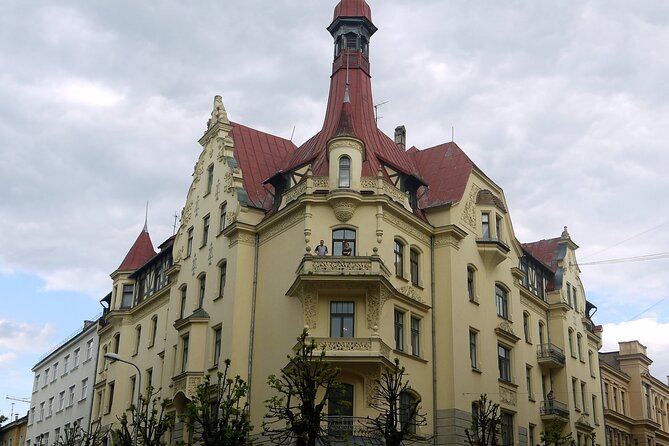
On Brivibas Iela, or Freedom Street, the tour looks at a former Lenin Street and examples of Soviet residential architecture. Edvards also points out Rigas Modes, described as Soviet Latvia’s most famous fashion house.
This section broadens the walk beyond major political sites. Residential buildings reveal the everyday setting created by the Soviet system, while Rigas Modes introduces clothing, style, and consumer life. Those details help you see that Soviet history was not only about leaders and police. It also shaped where people lived, what they wore, and how public streets were named.
The route gives this stop about 10 minutes. That is enough to identify key examples and explain their meaning, but not enough for a full architectural survey. Pay attention as you walk between stops, since some of the useful detail may come during the transitions.
For visitors who mainly know Riga through medieval streets and Art Nouveau façades, this is a helpful correction. The city has another layer, and Brivibas Iela makes that layer visible without requiring a separate museum visit.
The KGB building brings the system into focus
The KGB Building is likely to be the most intense stop on the route. It was the headquarters of the Soviet secret police in Latvia, and Edvards discusses recruitment methods, interrogation methods, and other aspects of its work.
The tour information uses a striking line about seeing all the way to Siberia from the top. That is best understood as a grim piece of historical framing rather than a promise of a scheduled rooftop visit. The key point is the building’s role: it connected local surveillance and interrogation with the wider Soviet security system.
This is another 10-minute stop, so you should not expect an extended building tour or guaranteed access inside. If you want a longer examination of the KGB site, ask about that separately before booking. On this walk, the building serves as the place where earlier themes become concrete.
The stop may be difficult for younger children, even though children are allowed when accompanied by an adult. The subject matter is serious, and parents should decide if the discussion suits their group.
Dailes Theatre closes the story with Soviet architecture
The final stop is Dailes Theatre, an iconic example of Soviet-era architecture. Here the discussion turns to the collapse of the Soviet Union.
Ending at a theatre is a smart choice. The building gives you a clear physical example of the design and scale associated with the Soviet period, while the conversation brings the political story to its close. The route begins with Soviet symbols and ends with the system’s collapse.
This final section lasts about 15 minutes, giving Edvards a little more time to connect the major themes. You have moved from revolutionary imagery to repression, surveillance, national protest, and independence. The ending should leave you with a usable framework for understanding what you see elsewhere in Riga.
The tour finishes here rather than back at the starting point. Dailes Theatre is about a 15-minute walk from the Old Town, which is easy enough to manage but worth knowing if you have a timed booking afterward.
What the private format is worth at $180.62
The listed price is $180.62 per group of up to 15 people. That is not a cheap individual walking tour, but the calculation changes if you are traveling with family or friends. A group of 10, for example, pays far less per person than a solo visitor, while still receiving a private guide.
The strongest value is the conversation. You are not paying for admission, since the listed stops are free. You are paying for Edvards’s structure, explanations, local perspective, and ability to answer questions as you walk.
The private format also helps with sensitive subjects. A large public group can make it awkward to pause or ask about deportations, surveillance, or family experience. With your own party, you can set the pace of questions and steer the discussion toward the parts that matter most to you.
There are limits. The tour lasts about two hours, and the schedule gives most stops 10 minutes. If you want long museum visits, interior access, or a detailed architectural study, this will feel too brief. If you want a clear introduction that helps you make sense of Riga, the price is easier to justify.
The tour is offered in English and includes a professional local guide, private service, and local taxes. Hotel pickup and drop-off are not included. It begins at Latviešu strēlnieku laukums and ends at Dailes Theatre, so wear comfortable shoes and allow time to reach the meeting point.
Who will get the most from this walk
I would choose this tour if you want history tied to real streets and buildings rather than a lecture in a classroom. It suits adults, families with older children, and anyone curious about how Latvia moved from Soviet control to independence.
It is also a good fit if you have already seen Riga’s postcard sights. The Freedom Monument and cathedral may be familiar, but the guide’s focus changes what you notice. Hotel Latvia, Brivibas Iela, and the KGB building add places you might otherwise pass without understanding.
You may want another option if your main goal is a museum interior, a broad general tour of Riga, or a relaxed stroll with little serious discussion. This subject includes deportations, interrogation, surveillance, and political repression. It is informative, but it is not light sightseeing.
Because only your group participates, you can ask for more attention to a particular era or theme. One of the strongest comments about Edvards’s approach is that he explains complex material clearly and uses personal family experience to bring it closer to everyday life. That personal element is a major reason to select this tour over a standard city walk.
Is Private Soviet Riga worth booking?
Book it if you want to understand the city’s 20th-century story and are willing to spend two focused hours walking between meaningful sites. Edvards’s personal connection, the private group setting, and the route’s mix of monuments, architecture, religion, surveillance, and peaceful protest give the tour a clear purpose.
The price works best for a group, not a solo visitor. You should also accept that the tour provides context rather than full entry to museums or historic buildings. For a deeper visit to the Occupation Museum or KGB site, plan extra time on your own.
For families, ask yourself if the subject matter is suitable for the children in your party. Children must be accompanied by an adult, and service animals are allowed. Most people can participate, and the route is near public transportation.
I would book this for a first serious look at Latvia’s recent past, especially early in a Riga stay. The walk can give meaning to monuments and streets you encounter later. Free cancellation is available if you cancel at least 24 hours before the start time, which gives you some useful flexibility when planning.
FAQ
Where does the Private Soviet Riga tour begin?
The tour begins at Latviešu strēlnieku laukums in central Riga, at Centra rajons, Rīga, LV-1050, Latvia.
Where does the tour finish?
It ends at Dailes Theatre, Brīvības iela 75, central Riga. The theatre is approximately a 15-minute walk from the Old Town.
How long does the tour last?
The tour lasts about two hours.
Is the tour private?
Yes. Only your group participates, with a maximum group size of 15 people.
What language is offered?
The tour is offered in English.
Is hotel pickup included?
No. Hotel pickup and drop-off are not included.
Are entrance tickets included?
The listed stops have no admission charge. The tour information does not include paid entry or a separate museum admission.
Can children join the tour?
Yes. Children may participate, but they must be accompanied by an adult.
What is the cancellation policy?
You can cancel for a full refund up to 24 hours before the experience start time. Cancellations or changes made less than 24 hours before the start time are not accepted for a refund.
Just added around Riga
- Taste Riga – Private Tour of Latvian Flavour★ 5.0 · 5 reviews
- Ultimate Art Nouveau Experience in Riga – Private Tour★ 5.0 · 4 reviews
- Private Sightseeing Tour in Sigulda★ 5.0 · 4 reviews
- Sunrise at Kemeri National Park – Small Group★ 5.0 · 5 reviews
- CITY QUEST RIGA: unlock the mysteries of this city!★ 4.0 · 5 reviews
- Riga Shooting Range Trapitava★ 5.0 · 7 reviews
- Rundale Palace and Bauska Castle from Riga★ 5.0 · 3 reviews
- Riga’s Architecture: A self-guided audio tour of the city’s art nouveau history★ 5.0 · 3 reviews
Private, compared.
Private Sigulda, Turaida, and Gauja National Park Tour
Read our review →
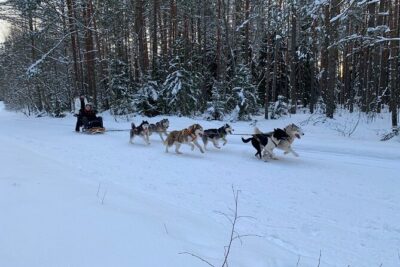
Ultimate Husky dog sledding experience in Latvia – Private tour from Riga
Read our review →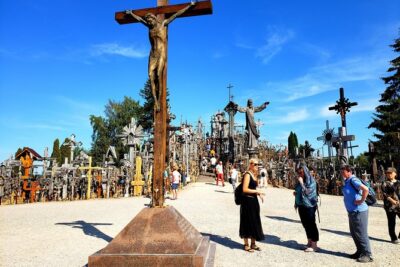
Private trip – Hill of Crosses / 2 countries in 1 day
Read our review →
Full-Day Private Trip to Cesis, Sigulda and Turaida from Riga
Read our review →
Private Full-Day Trip to Hill of Crosses, Rundale Palace & Bauska
Read our review →Browse the lists this tour appears in