
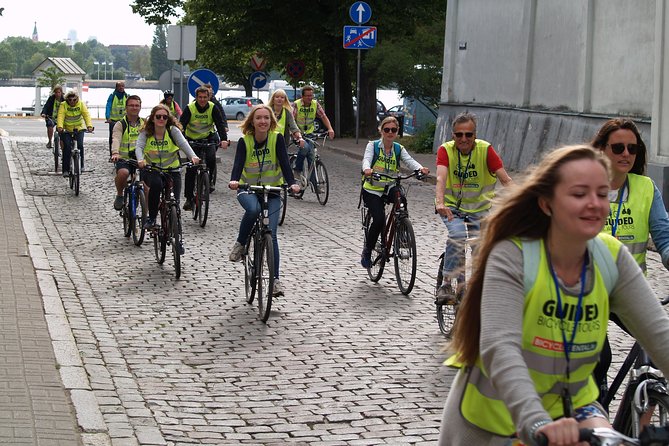
Reviewed · CYCLING TOURS
Riga Highlights Bike Tour
Riga reveals itself quickly from a bicycle. In about two and a half hours, you can move from the Russian Orthodox Cathedral and Art Nouveau façades to Central Market, Holocaust memorials, Stalin-era architecture, and the riverfront warehouses of Spikeri. It is a smart way to see parts of the city that sit beyond the usual Old Town walk.
I like the well-chosen route, which mixes grand buildings, parks, difficult history, and everyday Riga. I also like the guide system, since you can hear the English-speaking guide while riding instead of bunching around every street corner. The main consideration is pace: this is a sightseeing ride, not a long stop-and-study tour, so you will see many places briefly.
Riga Highlights Bike Tour at a glance
- Covers central Riga and beyond Old Town: You visit parks, Art Nouveau streets, Central Market, Spikeri, memorials, and major Old Town sights.
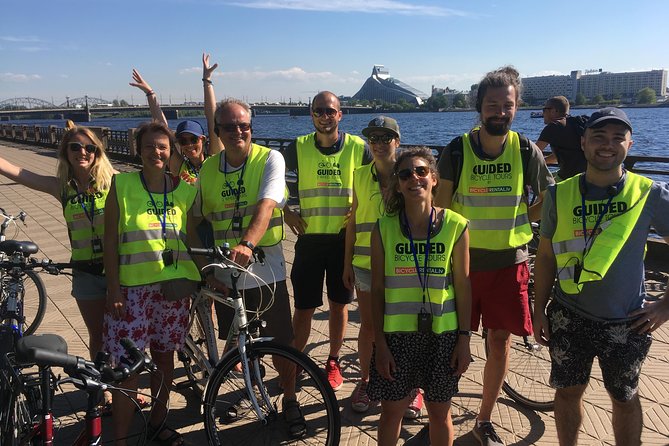
- Includes the basic riding gear: Bicycle, safety vest, professional guide system, and helmet if needed are provided.
- Keeps the group moving: The route lasts about 2 hours and 30 minutes and has a maximum of 20 people.
- Adds useful local context: Your English-speaking guide points out places to eat, drink, and explore after the ride.
- Works well for first-time visitors: You get a quick map of Riga’s main districts before choosing where to return on foot.
- Requires sensible clothing: The tour operates in all weather, with rain ponchos available, but poor weather can still affect the experience.
Why a bicycle is a good fit for Riga
Riga’s central sights are spread across several districts. Old Town, the Art Nouveau quarter, Central Market, the parks, and the Daugava riverfront are close enough to connect but far enough apart to make a walking tour feel divided.
A bicycle fixes that problem. You spend less time getting from one district to the next and more time seeing the change in Riga’s character. One moment you are looking at ornate early twentieth-century façades. Soon after, you are beside market halls, memorials, or old warehouses.
The route also gives you a useful first orientation. I would use it early in a Riga stay, then return to Alberta iela, Central Market, or Old Town when you have more time to look closely.
The ride is not presented as a cycling challenge. One rider found the pace comfortable without being sluggish, which is important. A tour that crawls can make cycling feel like work, while one that moves too quickly leaves you chasing the group. Riga is flat, and one rider who brought an e-bike needed its extra help only a couple of times. The supplied details do not promise an e-bike, so do not book this expecting electric assistance.
A few more Riga trips to weigh up
- Discover Riga Bike Tour
★ 5.0 · 166 reviews - Husky dog sled/bike kart ride in Latvia ~ 3h group tour from Riga
★ 4.5 · 30 reviews - Guided Ebike Tour on Forest Roads and Trails Near Riga
★ 5.0 · 19 reviews
Esplanade begins the city orientation
The tour starts at Esplanade, one of Riga’s central green spaces. In roughly ten minutes, you take in three major buildings: the Latvian National Museum of Art, the Russian Orthodox Cathedral, and the Latvian Academy of Art.
This is a strong opening because the buildings show Riga’s mixed cultural background without requiring a long lecture. The museum presents Latvian art in a grand setting, the cathedral adds a striking Orthodox presence, and the Academy of Art brings a very different architectural style.
You should expect a short stop rather than an interior visit. Admission is listed as free, but the tour does not include time for museum entry. If the museum interests you, mark it for another day.
Viesturdārzs brings in parks and public memory
Viesturdārzs is one of Riga’s largest parks outside the Old Town area. The stop lasts about five minutes and includes a triumphal arch and a memorial connected with Latvia’s Song Festival tradition.
This pause gives the ride some breathing room after the buildings of Esplanade. It also points to a part of Latvian identity that is easy to miss if you focus only on architecture. The Song Festival is important in Latvian public life, and the memorial helps place Riga within that wider culture.
The drawback is simple: five minutes goes fast. You will get the guide’s explanation and a look around, but not a leisurely park visit.
Alberta iela delivers the Art Nouveau highlight
Alberta iela is likely the architectural high point of the route. It sits at the heart of Riga’s Art Nouveau district, a UNESCO World Heritage area known for its elaborate façades and decorative details.
This is where the bicycle tour earns much of its price. You can reach the district without spending a large part of the tour walking between Old Town and the newer central streets. The guide can point out the façades as a group, giving you a framework for noticing shapes, ornament, and the different feel of this part of town.
The scheduled stop is about ten minutes. That is enough for an introduction and photographs, but you will want to return on foot if Art Nouveau is your main interest. The route gives you a preview, not a detailed architectural study.
Same city, a completely different kind of day:
- Riga Old Town walking tour
★ 4.5 · 304 reviews - Latvian food tasting tour at Riga Central market
★ 4.5 · 241 reviews - 2 countries! Hill of Crosses, Rundale Palace and Bauska castle
★ 5.0 · 225 reviews - From Riga: Husky Sledding or Wheel Kart Tour
★ 4.9 · 155 reviews
Vērmanes Garden adds a quieter stop
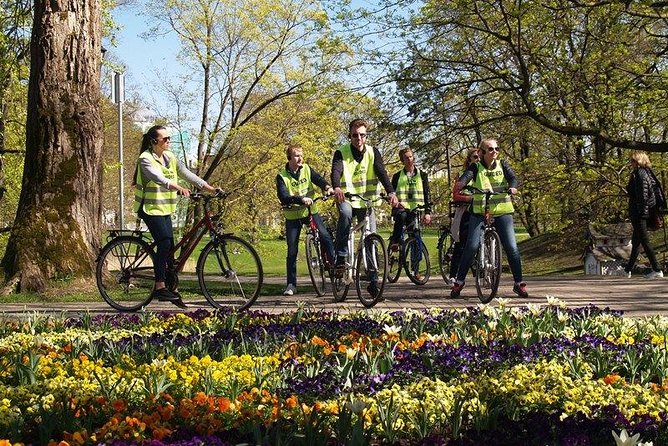
Vērmanes Garden began as a private park donated to Riga by Anna Vērmane. Today it contains monuments connected with important figures and offers another change of pace.
The planned stop is only about three minutes, so think of it as a quick landmark visit. You will learn why the park matters and see some of its monuments, but you will not have much time to explore its paths.
I like this stop because it keeps the tour from becoming a parade of large buildings. Riga’s parks help explain how the city is used between its grand cultural sites.
The synagogue memorial requires a respectful pause
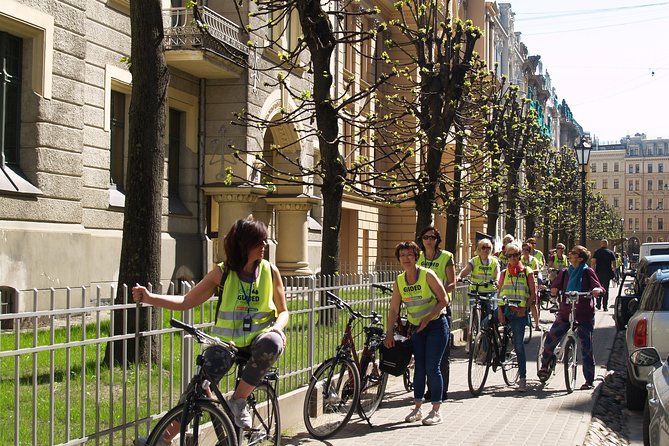
The Riga Great Choral Synagogue Holocaust Monument marks the site connected with Riga’s Jewish ghetto and the Holocaust. The tour allows about seven minutes here.
This is one of the most important stops because it brings the city’s wartime past into the route. The memorial is not simply another photo point. Give it your attention, listen carefully to the guide, and avoid treating the stop as a rushed break between cycling sections.
The short timing may feel limited for such serious subject matter. Still, including it makes the tour more honest than one focused only on attractive streets and famous buildings. If you want to study Riga’s Jewish history in greater detail, you will need a separate visit.
Central Market shows everyday Riga
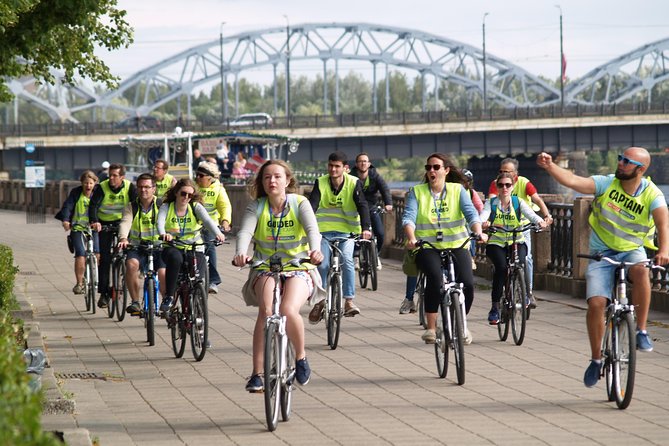
Riga Central Market is one of the tour’s most useful stops. It was once considered the biggest market in Europe and is also one of Riga’s UNESCO World Heritage sites.
The market is a good counterpoint to the formal architecture earlier in the ride. Here the focus turns to food, shopping, and ordinary city life. The guide can help you understand why this is a place worth returning to, and the route’s local advice about where to eat or drink is especially useful at this point.
The scheduled stop is about five minutes. That is enough to get your bearings, but not enough for a proper market visit, meal, or careful browse through the stalls. I would plan to return later, when you can move at your own pace.
The Academy of Sciences points to the Soviet period
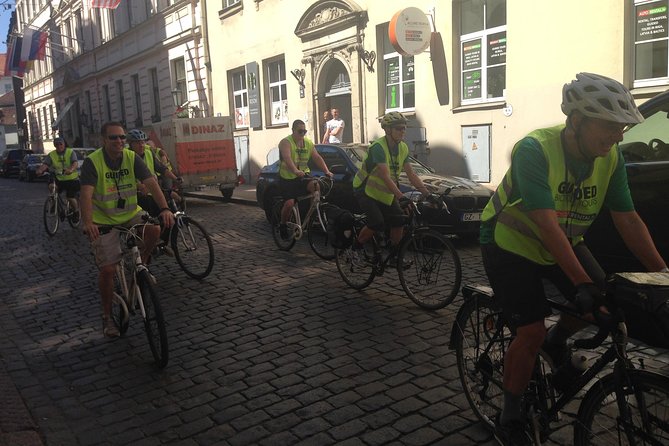
The Latvian Academy of Sciences Observation Deck is represented on the route by Stalin-era architecture. The stop lasts about three minutes.
This building adds a twentieth-century political layer to the tour. After the Art Nouveau streets and historic market district, its monumental style feels very different. Even a brief explanation helps you read Riga as a city shaped by several periods, not just by its medieval center.
The information provided does not say that the observation deck visit is included. Treat this as an exterior stop unless your guide tells you otherwise. Three minutes is enough for a look and a quick explanation, not an extended visit upstairs.
Spikeri connects warehouses with the riverfront
Spikeri is a former warehouse district. In the nineteenth century, its buildings supplied Riga with basic goods. Today the area includes shops and a concert hall between Central Market and the Daugava River.
This is a particularly good stop for seeing how old commercial buildings can take on new uses. It also links the market district with the riverfront, giving the route a clear sense of movement through the city.
The stop is about three minutes, so you will not have time to browse the shops or attend a concert. Still, the short visit helps you identify an area to return to after the tour.
Old Town landmarks close the picture
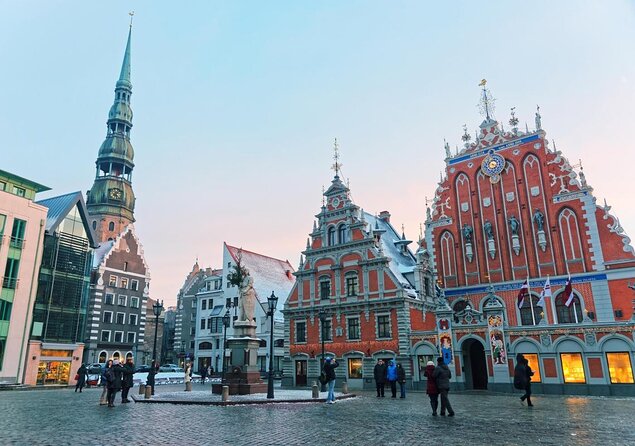
The route also includes Riga Town Hall, the House of the Blackheads, the Museum of the Occupation of Latvia, and St. Peter’s Church, described as the tallest church in Riga.
These sights complete the tour’s city-wide view. The House of the Blackheads and Town Hall represent the historic center, while the Occupation Museum addresses Latvia’s difficult twentieth-century experience. St. Peter’s Church gives you one of Riga’s most recognizable landmarks.
No separate stop times are provided for this final group, so expect them to be viewed as part of the moving route or in brief pauses. If you want interior visits, tower access, or a close look at the museum, plan those separately.
How the guide system changes the ride
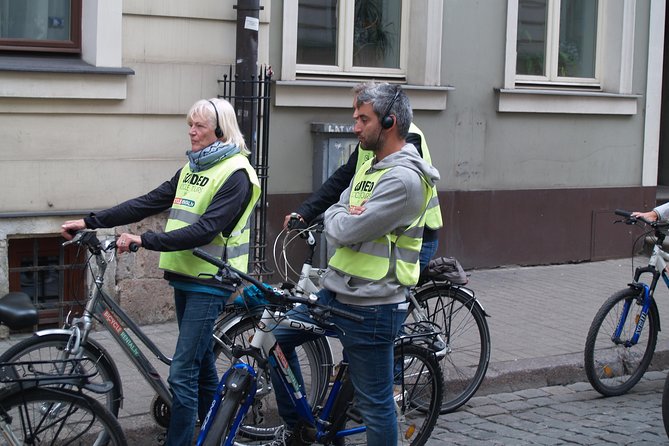
A professional guide system with an earpiece is included. This is more useful than it may sound. You can keep riding at a reasonable pace while hearing the guide point out buildings and share short pieces of information between stops.
The system also avoids the common problem of standing in a noisy street corner while half the group struggles to hear. One rider specifically appreciated being able to listen while continuing to cycle.
The tour is offered in English. Inga is one of the local guides associated with the experience, and the guide’s role goes beyond naming buildings. You can also ask for suggestions on places to eat, drink, and see after the ride.
The group size is listed as a minimum of four and a maximum of 20, while another section states a minimum of two. That inconsistency is worth noting. Ask the operator about the required minimum for your chosen date if your plans depend on the tour running.
Price, equipment, and extra costs
At $43.45 per person, this is not the cheapest way to see Riga, but the value is reasonable if you want transportation, orientation, and local explanation in one package. The tour includes the bicycle, safety vest, guide system, and helmet if needed.
You pay extra for a bottle of still drinking water, listed at €2. A Hamax child seat costs €10 and is available for a child up to 22 kilograms. That makes the tour more practical for families, though you should arrange the seat rather than assume it is included.
The group maximum is 20 people. That is large enough to provide a social outing but small enough to keep the route manageable, especially with bicycles. The quality of the experience will still depend on how many people are booked on your date.
The tour is booked, on average, 17 days ahead. That is a useful planning signal, especially if you have only a short Riga visit. I would reserve before arrival rather than treat it as a last-minute activity.
Weather, clothing, and physical demands
The tour operates in all weather conditions, and rain ponchos are available. Poor weather can still affect your comfort, visibility, and enjoyment, so dress for the forecast and bring layers.
A cancellation caused by poor weather offers either a different date or a full refund. The same applies if the minimum number of participants is not reached. You can cancel for a full refund up to 24 hours before the start time, but cancellations or changes inside that window are not refunded or accepted.
Most people who can ride a bicycle should find the route manageable, especially since Riga is flat. Still, you will be cycling for about two and a half hours, with traffic, stops, and group movement. Service animals are allowed, and the tour is near public transportation.
Who should book this Riga bike tour
I would recommend it to a first-time visitor who wants to understand Riga’s layout quickly. It is also a good match for anyone who finds long walking tours tiring or wants to reach Central Market, Spikeri, and the Art Nouveau district in one outing.
It suits travelers who like a guide’s context but still want the pleasure of riding. The pace is reported as neither too slow nor too fast, and the route gives you useful ideas for later meals and sightseeing.
Families can consider it, provided the child seat is arranged and the child weighs no more than 22 kilograms. People who want long museum visits, detailed memorial interpretation, or extensive time at each landmark may find the brief stops frustrating.
Should you book the Riga Highlights Bike Tour?
Book it if you want a broad, efficient introduction to Riga and like the idea of moving between districts under your own pedal power. The route’s best qualities are its range, its flat streets, its English-speaking local guide, and the earpiece that lets you hear information while riding.
Skip it if your priority is slow photography, museum interiors, or a detailed study of one neighborhood. For most first visits, though, $43.45 buys a useful overview of Riga that reaches well beyond Old Town. Schedule it early in your stay, then return to the places that catch your eye.
FAQ
How long is the Riga Highlights Bike Tour?
The tour lasts approximately 2 hours and 30 minutes.
What language is the tour offered in?
The tour is offered in English with a local English-speaking guide.
Where does the tour start?
The meeting point is Pils iela 14, Centra rajons, Riga, LV-1050, Latvia.
Where does the tour end?
The activity ends back at the meeting point.
Is the bicycle included?
Yes. The bicycle is included in the tour price.
Is safety equipment provided?
A safety vest and professional guide system are included. A helmet is available if needed.
Is drinking water included?
No. A bottle of still drinking water is available for an additional €2.
Can I request a child bicycle seat?
Yes. A Hamax bicycle child seat is available for €10 for a child weighing up to 22 kilograms.
What is the maximum group size?
The tour has a maximum of 20 participants. The supplied details give conflicting minimum group sizes, listing both two and four, so confirm the minimum for your date.
Can I cancel for a full refund?
Yes. You can cancel at least 24 hours before the experience starts for a full refund. Cancellations made less than 24 hours before the start are not refunded.
Does the tour operate in bad weather?
The tour operates in all weather conditions, and rain ponchos are available. If the operator cancels because of poor weather, you will be offered another date or a full refund.
Just added around Riga
- Taste Riga – Private Tour of Latvian Flavour★ 5.0 · 5 reviews
- Ultimate Art Nouveau Experience in Riga – Private Tour★ 5.0 · 4 reviews
- Private Sightseeing Tour in Sigulda★ 5.0 · 4 reviews
- Sunrise at Kemeri National Park – Small Group★ 5.0 · 5 reviews
- CITY QUEST RIGA: unlock the mysteries of this city!★ 4.0 · 5 reviews
- Riga Shooting Range Trapitava★ 5.0 · 7 reviews
- Rundale Palace and Bauska Castle from Riga★ 5.0 · 3 reviews
- Riga’s Architecture: A self-guided audio tour of the city’s art nouveau history★ 5.0 · 3 reviews
Cycling Tours, compared.
Husky dog sled/bike kart ride in Latvia ~ 3h group tour from Riga
Read our review →
Guided Ebike Tour on Forest Roads and Trails Near Riga
Read our review →
Browse the lists this tour appears in