
Reviewed · RIGA OLD TOWN WALKING TOURS
Riga: Old Town Legends & Black Balsam Tasting
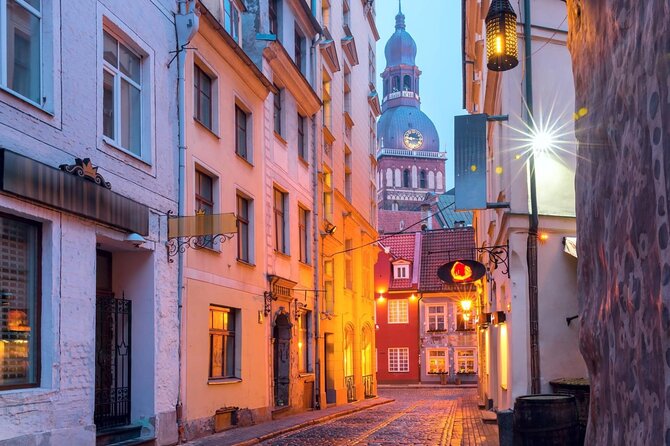
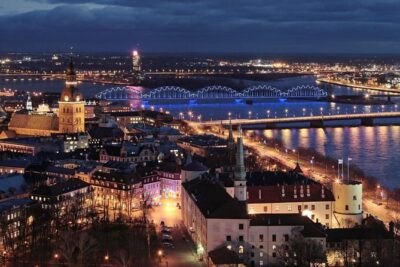
Riga’s Old Town is best understood on foot, and this one-hour walk gives you a quick route through its most important sights, from the old river course to St. Peter’s Church. You also begin with a small taste of Riga Black Balsam, or a soft drink, water, or coffee if a strong herbal liqueur is not your thing.
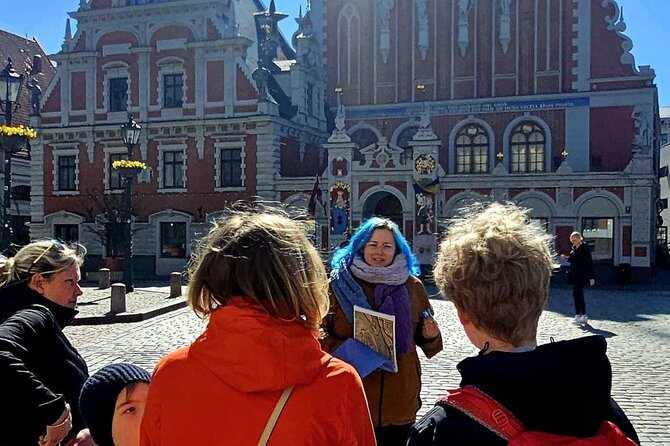
I like the small group limit of 15, which makes it easier to ask questions and keep a comfortable pace. I also like the way the route mixes major landmarks with smaller details, including the last surviving Swedish Gate and the old Sand Tower. The main drawback is time: one hour is enough for an excellent orientation, but not for extended interior visits or a slow look at every building.
Key points before you book
- Start with Riga Black Balsam: The tasting gives you a quick introduction to Latvia’s famous herbal drink before the walking begins.
- See the old river route: A present-day square follows the path of the Riga River, once used to move Latvian grain.
- Visit several medieval landmarks: The route includes the Three Brothers, Swedish Gate, St. Peter’s Church, the Dome Cathedral, and Town Hall Square.
- Expect cobblestones: The route is nearly flat, but comfortable walking shoes matter on Old Riga’s hard, uneven streets.
- Keep the group personal: A maximum of 15 people should make the guide easier to hear and the walk easier to follow.
- Pay little for a useful overview: At about $11.91 per person, this is an inexpensive way to get your bearings before exploring Riga on your own.
A quick Black Balsam welcome before the walk
The tour begins with a small tasting of Riga Black Balsam. This dark Latvian herbal liqueur is part of the city’s local character, and trying it at the start gives the walk a distinct Riga flavor rather than making it just another architecture tour.
You do not have to drink alcohol. The included alternative is a soft drink, water, or coffee, so you can still take part if you prefer not to sample the Balsam. The tasting is small, not a full bar visit, but that suits the short format. Think of it as an introduction, not a separate tasting event.
I like this opening because it gives you something local before the guide begins the history. If you enjoy regional food and drink, it adds personality to the outing. If you are mainly here for buildings, it takes only a little time and gets you moving quickly.
More riga old town walking tours in Riga:
- Riga Old Town walking tour
★ 4.5 · 304 reviews - Riga Old Town Walking Tour in a Small Group
★ 4.5 · 132 reviews - Private Riga Old Town Walking Tour
★ 5.0 · 62 reviews
Following the lost river through central Riga
One of the most interesting stops is a square that once occupied the course of the Riga River. Until the 16th century, the river served as a shipping route for moving Latvian grain. Over time it narrowed and was known by names including the Rīdzene River and Rīdziņa.
Today, you see pavement and flower beds instead of water. That contrast is the point. Old Riga can look fixed and permanent, but this place reminds you that the city has changed shape many times. A route that now carries pedestrians once carried goods into the medieval town.
This stop rewards a guide who can explain what is no longer visible. Without that context, you might simply pass through another attractive square. With it, you begin to read the streets as traces of an older city rather than as a collection of pretty façades.
Sand Tower and the medieval defensive wall
The walk continues to one of Riga’s medieval fortification towers, originally called the Sand Tower. It was built in 1330 and forms part of the city’s defensive story.
A tower like this helps explain Riga’s early priorities. The city was not only a trading center with churches and merchant houses. It also needed walls, gates, and lookout points. The Sand Tower gives you a physical reminder of the limits that once defined the settlement.
Do not expect a long museum visit here. The value is in seeing a surviving piece of the old defenses while the guide explains its place in the city. Since the route moves briskly, you will want to listen closely rather than expect time for an extended examination.
Riga’s Catholic cathedral and a distinctive medieval tower
The Riga Archdiocesan Cathedral is the main Catholic church in Latvia. Its slender tower has kept the pyramidal form associated with Riga’s medieval church towers better than any other example in the city.
The church also carries an important local date. It became Riga’s first Latvian parish church in 1523. That detail adds a human and civic layer to the architecture. This was not simply a religious building. It was part of the growth of Latvian parish life in the city.
The stop is especially useful for visitors who want to understand Riga’s mix of religious traditions. The tour later includes another cathedral, so pay attention to the distinction. Riga’s old center brings together several major churches, each with its own history and architectural shape.
More riga black balsam tastings in Riga:
- Shared Activity Riga Black Balsam 18th Century Degustation
★ 5.0 · 9 reviews - Riga Black Balsam XO Tasting Exclusive Flavor in Limited Edition
★ 5.0 · 7 reviews - Private Snowmobile or ATV Safari with Riga Black Balsam Tasting
★ 5.0 · 4 reviews
The Three Brothers and Riga’s oldest homes
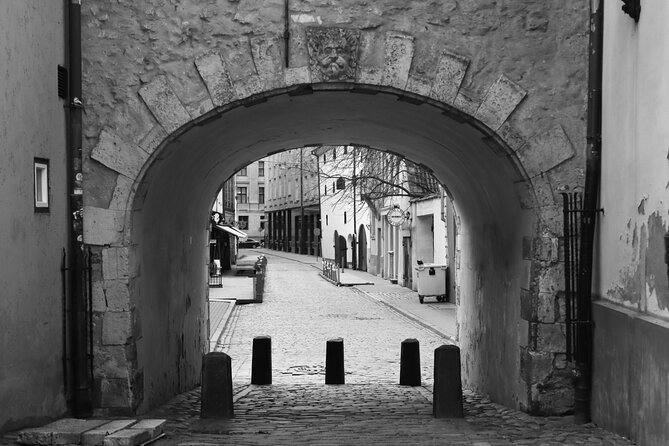
The Three Brothers are Riga’s oldest surviving residential complex. Three houses, built close together from the 15th century onward, form one of the city’s most recognizable architectural groupings. A local legend says that men from the same family built them.
Today, the buildings house the Museum of Architecture and the National Center for the Protection of Cultural Monuments. The complex is a good reminder that Old Riga was not only made for grand churches and public squares. People lived, worked, and crowded into these narrow homes as the city developed.
The Three Brothers are a compact stop, which works well in a one-hour tour. You can see how tightly the buildings fit together and hear the family story without needing a lengthy visit inside. If architecture interests you, note the changing forms across the three houses. They show how residential design shifted over several centuries.
Swedish Gate, the last surviving city gate
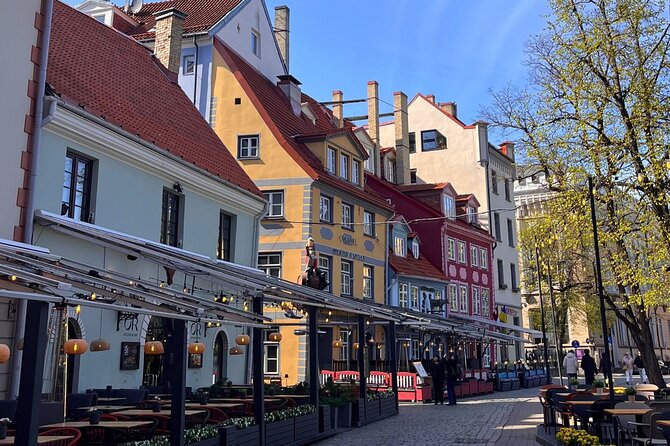
The Swedish Gate is the only one of Riga’s original eight fortification gates still standing. That makes it one of the clearest physical links to the walled city.
The gate is not a vast monument. Its importance comes from survival. Eight gates once controlled movement through Riga’s defenses, but only this one remains. As you pass through it, you get a simple sense of how people once entered and left the city under the protection of its walls.
This is also a place where the small group helps. A guide can point out the gate and explain its role without the stop becoming crowded or confusing. The tour’s short length means you will not linger for long, but the fact is memorable and easy to use later as you explore the Old Town by yourself.
The cathedral with many architectural layers
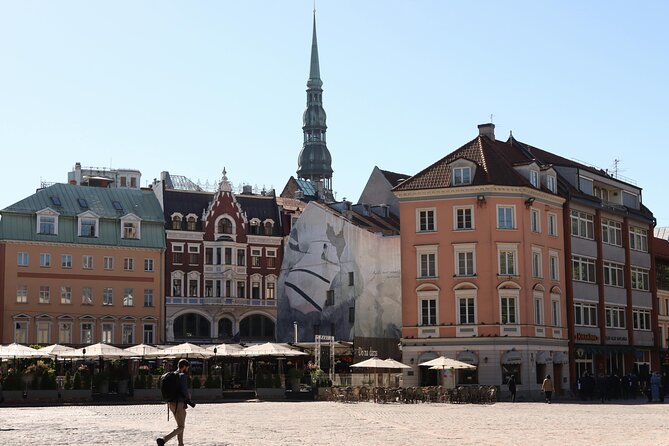
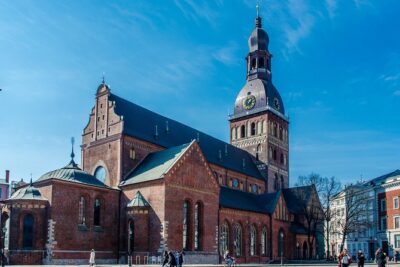
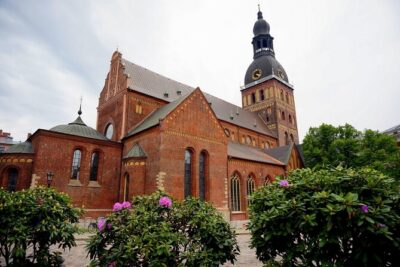
Another cathedral on the route is the largest and one of the oldest sacred buildings from the medieval period in the Baltic region. Its design brings together Romanesque, early Gothic, Baroque, and Art Nouveau features.
That mix makes the building valuable even if you are not an architecture specialist. Instead of seeing one clean style, you can see how a major church changed as Riga changed. Different periods left their mark, and the building became a record of those changes.
The cathedral still hosts church services and concerts by local and international musicians. The tour does not include a concert or promise an interior visit, so treat this as an exterior and historical stop within the walking route. If you want to attend a service or performance, you will need to arrange that separately.
Rebuilt Town Hall Square and the House of the Blackheads
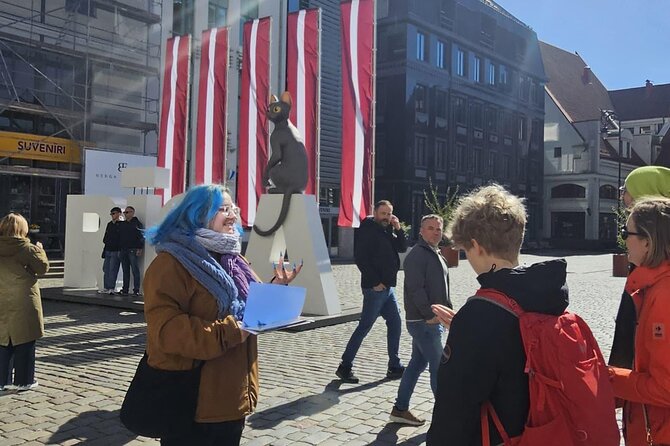
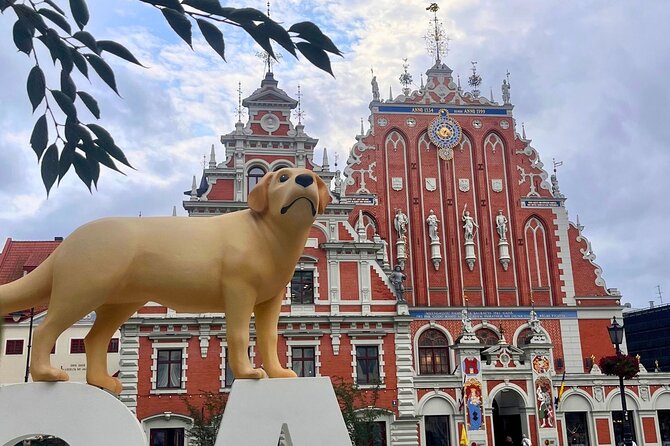
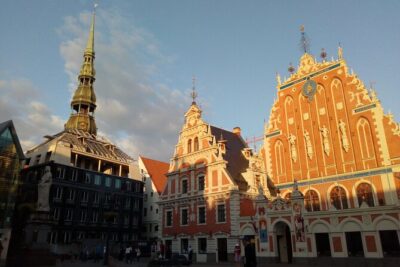
Town Hall Square was destroyed during World War II and has been completely rebuilt. Today, its reconstructed buildings include the Town Hall and the historic façade of the House of the Blackheads.
This is one of the tour’s more useful stops because it raises a question many old European cities must face: what does it mean to rebuild a historic center after destruction? The square looks historic, but much of what you see is reconstructed. That does not make it unimportant. It gives you a chance to consider how Riga preserves its identity after wartime loss.
The square also recalls a much older Christmas tradition. Five hundred years ago, Riga lit a city Christmas tree here. A memorial plank marks the tradition today, and a new tree is decorated each year.
The House of the Blackheads provides a strong visual focus, with its ornate façade welcoming people into the square. You may find this stop especially appealing for photographs, but listen for the rebuilding story too. It gives the attractive scene more meaning.
St. Peter’s Church and the end of the route
St. Peter’s Church is the highest church in Riga and one of the oldest and most notable examples of medieval monumental architecture in the Baltic States. Its height makes it an easy reference point as you move through the Old Town.
The church is a fitting final landmark for a short introduction to Riga. After seeing defensive walls, residential buildings, public squares, and more than one cathedral, St. Peter’s brings the city’s medieval scale together in one dramatic structure.
The tour ends back at the meeting point on Torņa iela. Since the activity lasts about an hour, you will still have plenty of time to continue exploring. You could use the walk as a first look, then return to the places that caught your attention. That is the right way to use this experience. It is an orientation, not a substitute for a full day in Riga.
What the guides add to a short route
A one-hour city walk depends heavily on the guide. The information supplied for this tour points to Mara as one of the guides, and her approach includes both the major sights and lesser-known places and facts.
That balance matters. A guide who only names buildings gives you a list. A guide who adds small stories helps you remember why the places matter. The strongest part of this experience appears to be the storytelling, along with the willingness to answer questions about Riga and the local area.
The pace also seems to be handled with care. The walk is described as nearly flat, and the guide adjusts speed to suit the group. That is useful in a compact group where people may have different walking habits. Still, you should wear good shoes. Cobblestones are your main surface, and flat does not mean smooth.
Is $11.91 good value for an hour?
At roughly $11.91 per person, this is a low-cost introduction to Riga. The price includes a local professional guide and the small Black Balsam tasting or nonalcoholic alternative. Tips are not included.
The value is strongest if you are new to Riga, have only a short window in the city, or want the basic layout before setting off alone. You get several major landmarks in a compact route, plus historical context that would be easy to miss while wandering.
The value is less strong if you want long interior visits, detailed architectural study, or a food tour with several tastings. The walk is short, and the Balsam sample is modest. You are paying for a focused orientation and local explanation, not an extended sightseeing program.
Group discounts may improve the price for larger parties. The mobile ticket also keeps the booking simple, and confirmation is provided at booking.
Who will enjoy this Riga walk most?
I would choose this tour for a first visit to Riga, especially if you want to understand the Old Town before exploring it at your own pace. It also suits cruise passengers and anyone with a tight schedule, since the route takes about an hour and returns to its starting point.
It works well for people who enjoy stories, architecture, and city history but do not want a long formal lecture. The small group limit should make it easier to hear the guide and ask questions.
You should think twice if uneven cobblestones cause trouble or if you need a fully accessible route. The tour is nearly flat, and most people can participate, but the supplied information does not promise an accessible surface throughout. Service animals are allowed, and the meeting point is near public transportation.
The activity is offered in English. If your group needs another language, this is not the right choice.
Booking, weather, and cancellation details
You can cancel for a full refund up to 24 hours before the scheduled start time. Changes made less than 24 hours before the start are not accepted, and cancellations inside that window are not refunded.
The activity requires good weather. If poor weather causes cancellation, you will be offered another date or a full refund. The tour also requires a minimum number of participants, so a cancellation for that reason brings the choice of another date, another activity, or a full refund.
The meeting point is Torņa iela 4, Centra rajons, Riga, LV-1050. The tour ends at the same place, which makes it easy to continue into Old Riga afterward.
Should you book Old Town Legends and Black Balsam Tasting?
Book it if you want an affordable, lively introduction to Riga in one hour. The route covers an impressive range of places, and the best part is the link between visible sights and less obvious facts, such as the buried river route and the surviving Swedish Gate.
The experience is particularly worthwhile with a guide such as Mara, whose route combines famous landmarks with smaller details. Bring good walking shoes, keep your expectations realistic about the short duration, and treat the Balsam sample as a local welcome rather than a full tasting session.
I would skip it only if you want extensive time inside the churches or a slower, specialist tour. For most first-time visitors, the low price, small group, English format, and useful overview make this a sensible first step in Riga.
FAQ
How long does the Riga Old Town tour last?
The tour lasts approximately one hour.
What language is the tour offered in?
The tour is offered in English.
Where does the tour start?
The meeting point is Torņa iela 4, Centra rajons, Riga, LV-1050, Latvia.
Where does the tour end?
The activity ends back at the meeting point.
Is Riga Black Balsam included?
Yes. A small Riga Black Balsam tasting is included before the tour. You can choose a soft drink, water, or coffee instead.
How large is the tour group?
The tour has a maximum of 15 participants.
Are service animals allowed?
Yes, service animals are allowed.
Can I cancel for a refund?
Yes. You can cancel at least 24 hours before the start time for a full refund. Poor weather or failure to meet the minimum number of participants may also lead to an alternative date or a full refund.
More Food & Drink in Riga
- Latvian food tasting tour at Riga Central market
★ 4.5 · 241 reviews - Best of Latvia, Jurmala, Kemeri N Park, Kuldiga City, Food & More
★ 5.0 · 34 reviews - Riga Central Market Traditional Food tasting experience
★ 4.5 · 18 reviews - Medieval Experience: Guided Sightseeing and Food Tasting
★ 4.5 · 11 reviews
Just added around Riga
- Ultimate Art Nouveau Experience in Riga – Private Tour★ 5.0 · 4 reviews
- Taste Riga – Private Tour of Latvian Flavour★ 5.0 · 5 reviews
- Private Sightseeing Tour in Sigulda★ 5.0 · 4 reviews
- Sunrise at Kemeri National Park – Small Group★ 5.0 · 5 reviews
- CITY QUEST RIGA: unlock the mysteries of this city!★ 4.0 · 5 reviews
- Riga Shooting Range Trapitava★ 5.0 · 7 reviews
- Rundale Palace and Bauska Castle from Riga★ 5.0 · 3 reviews
- Riga’s Architecture: A self-guided audio tour of the city’s art nouveau history★ 5.0 · 3 reviews
Riga Old Town Walking Tours, compared.
2 Hours Walking Tour in Legends and Secret of Riga’s Old Town
Read our review →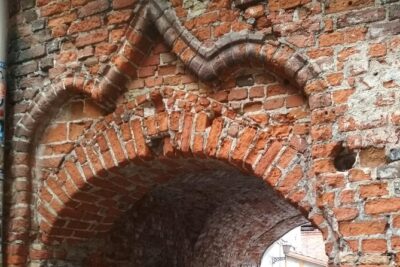
Browse the lists this tour appears in